info@journalpublishers.co.uk
 +44 746 075 1919

An athlete is far from the player of the game. Strength, discipline, resilience, and dedication are the bedrock of an athlete's journey, applicable throughout their career.
From local sporting events to competing for their country at the Olympic Games, athletes dedicate many hours to enhancing their physical and mental abilities, whether they are in the ring or on the field.
When we understand what it takes to be an athlete, we will see the commitment required to be an outstanding athlete. Young people continue to be inspired; they want to replicate the success of top athletes in British sport.
Define Athlete: Who Are They?
Winning medals and championships is not the only definition of an athlete. An athlete is someone who regularly exercises and/or participates in competitive sport and aims to improve their endurance, strength, speed, flexibility, and technical ability.
In addition, they regularly prepare to become proficient in a sport or physical activity. It encompasses professional footballers, marathon runners, swimmers, cyclists, CrossFit enthusiasts, gymnasts, and recreational runners.
The Sport Science has come to an understanding that sports performance is based on a combination of factors which include the following:
- Physical conditioning
- Technical skills
- Mental resilience
- Nutrition
- Recovery
- Consistent practice
The American College of Sports Medicine (ACSM) has determined that the intelligent use of structured training programs and adequate recovery can improve athletic performance and reduce injury risk. This evidence continues to influence coaching practice globally and in the UK.
How do Athletes Train Everyday?
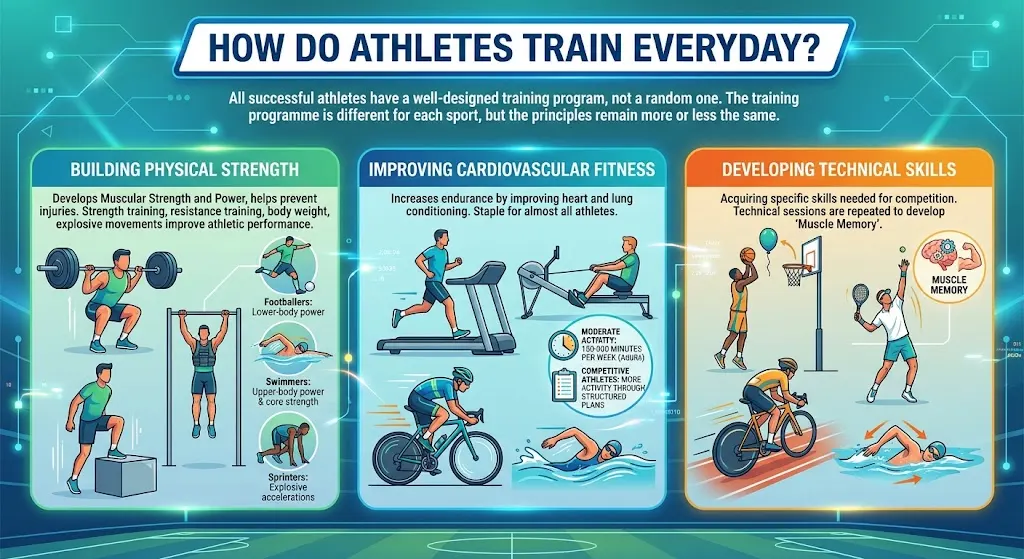
All successful athletes have a well-designed training program, not a random one. The training programme is different for each sport, but the principles remain more or less the same.
1. Building Physical Strength
Muscular Strength and Power are developed through resistance training, and it also helps prevent injuries. Strength training, resistance training, body weight, and explosive movements all result in improved athletic performance.
The footballers will be working on lower-body power; the swimmers will be working on upper-body power and core strength. Likewise, sprinters run explosive accelerations and endurance runners perform stamina runs.
2. Improving Cardiovascular Fitness
Aerobic exercise is intended to increase endurance by improving the heart and lung conditioning. Running, rowing, cycling, swimming, and interval training will remain a staple part of the daily training for almost all athletes.
Moderate activity for adults is recommended to be 150-300 minutes per week, and competitive athletes can engage in more activity through structured training plans.
3. Developing Technical Skills
Champions don't just happen from being physically fit. In place of that, they need to acquire technical skills. For example,
- Basketball players use balloons to practice their aim.
- Tennis players get better at their serves
- Bicyclists learn to develop pace.
- Swimmers develop their swimming skills.
This is very important in competition, as technical sessions are repeated, which is called ‘muscle memory '.
Are you looking to improve your research or academic work in sports? Our professional journal writing services are the best.
How do Athletes Train for the Olympics?
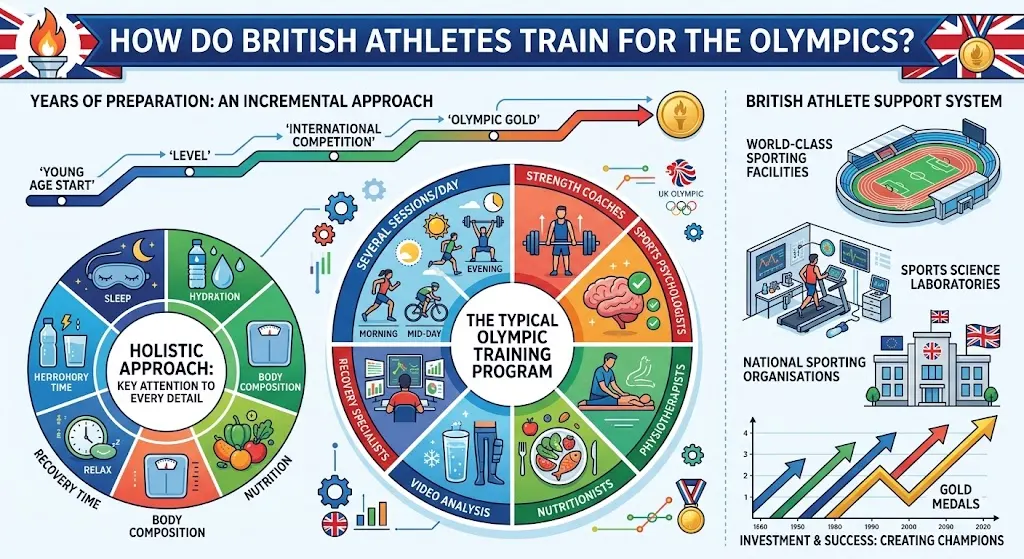
It takes several years to prepare for the Olympic Games, and an incremental approach is needed. Elite Competition Trainers start training at a young age before they compete internationally.
The typical Olympic training program includes:
- Several training sessions throughout the day.
- Personal strength coaches
- Sports psychologists
- Physiotherapists
- Nutritionists
- Video performance analysis
- Recovery specialists
When it comes to sleep, hydration, body composition, recovery time, and nutrition, athletes pay attention to every detail of their performance.
Nationally, British athletes can also access world-class sporting facilities and sports science laboratories through their sporting organisations. The investments have, over the last couple of decades, created numerous Olympic gold medalists.
How do CrossFit Athletes Train?
The CrossFit training is a blend of functional fitness, endurance training, weight lifting, and gymnastics, all in one crazy programme.
CrossFitters train for the unknown, the unpredictable, and the unpredictable things that come with it – strength, endurance, agility, flexibility, balance, coordination, and mental toughness.
Training frequently includes:
- Olympic lifts
- Pull-ups
- Rope climbs
- Rowing
- Running
- Burpees
- Box jumps
- Handstand movements
It is also vital in recovery, as high-intensity exercise is a strain on muscles and other joints. Good sleep, stretching, mobility exercises, hydration, and nutrition decrease the risk of injury and increase performance.
How do Hybrid Athletes Train?
Hybrid athletes are not only endurance athletes but strength athletes as well.
If you're a hybrid, you might perform heavy squats in the morning and then run a half marathon in the afternoon. Others also engage in bodybuilding, cycling, rowing, swimming, or obstacle running.
This form of training is becoming popular because it allows for simultaneous training of many fitness components.
A balanced weekly programme can look like:
- Strength sessions
- Long-distance running
- Sprint intervals
- Mobility exercises
- Recovery days
- Core stability training
It's a balance and needs to be well planned so that you don't overtrain without enough recovery, which brings with it fatigue and risk of injury.
Athlete Daily Routine
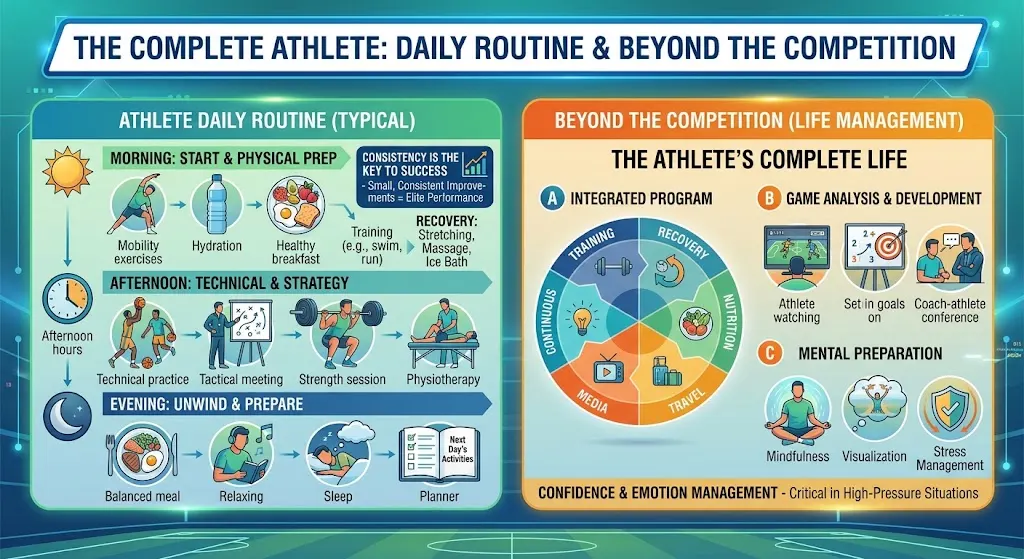
A pro athlete follows a well-structured routine to maximize performance. This is what an athlete's day should be like:
Mornings are frequently started with mobility exercises, hydration, and a healthy breakfast. Usually, training is done before lunch and then recovery activities like stretching, massage,or ice baths after the training.
Afternoon activities are usually technical practice, tactical meetings, strength sessions, and physiotherapy appointments. Evenings focus on eating a balanced meal, unwinding, getting a good night's sleep, and planning the next day's activities. This is a glimpse of the athlete's life!
It is a well-known fact among sports psychologists that consistency is the key to success in sport. If you make small, consistent improvements over time, you'll reach elite performance.
The Life of an Athlete – Beyond the Competition
The life of an athlete is more than just training and competing. Whether it's meal planning or a restful night's sleep, every decision will have an impact on future performance.
An organised athlete's programme includes training, recovery, nutrition, travel, media, and continuous learning.
Athletes in pro sports also take time to watch other games, establish goals for improvement based on statistics, and practice with coaches to help them refine their skills.
Preparation of the mind is also very important. Elite competitors use mindfulness, visualisation, and stress management as common tools to help them remain focused in challenging situations. High-pressure situations are often a part of sports, and these techniques are well known to those involved in professional sports because of the importance of confidence and emotion management.
Great Britain Athletes Who Changed Sporting History
Great Britain athletes have achieved incredible feats across a variety of sports, inspiring generations. Their commitment has helped to enhance the UK's position as a world-leading sporting country.
- Sir Mo Farah is one of Britain's greatest distance runners, winning four Olympic gold medals for the country in the 5,000m and 10,000m events. His careful preparation and determination are an inspiration to young runners across the country.
- Dame Jessica Ennis-Hill made a significant impact on British athletics by her versatility, resilience, and leadership in the heptathlon. Her win at the Olympics lit a spark in the hearts of thousands of young women, inspiring them to take up sports.
- Sir Chris Hoy is one of Britain's greatest ever Olympians, having won six gold medals after years of hard work and technical skill.
Various research publications show that, through consistent effort, professional coaching, and dedication, these sporting heroes have achieved success that will last only as long as they remain committed.
Famous UK Athletes Who Continue To Inspire
Many well-known UK Athletes continue to influence the world of sports, motivating future generations.
- At 18, Emma Raducanu made headlines around the world after winning the US Open, displaying exceptional nerves of steel in the process.
- Tom Daley has competed in several Olympic Games and has won medals for Great Britain; he is also a mental health and inclusion champion.
- Dina Asher-Smith is among Britain's swiftest sprinters and has been regularly pitting herself against the world's greatest athletes while helping to promote the sport.
All of these great athletes prove that it takes more than talent to excel. It takes resilience, discipline, adaptability and years of focused preparation to succeed.
Women Athletes Breaking Barriers
Women's sports have come a long way and have made great strides in modern sports.
Female participants break the stereotype barrier and encourage participation of all ages. A rise in investment, coaching opportunities, and media attention have helped to improve representation in international competitions.
Today, there are more opportunities for future generations of female athletes as many governing bodies now actively promote equal access to facilities, coaching and funding.
A Journal Publication by UK Sport says that funding for women's sport has boosted participation and success in sports including athletics, cycling, rowing, football and rugby
Famous Female Athletes in the UK
Many famous female athletes have brought about a marked change in their sports through their outstanding performances and leadership.
- Paula Radcliffe still holds one of the fastest marathon performances in history and remains an inspiration to those who run long distances all over the world.
- Through hard work, collaboration, and 'remarkable consistency', Laura Kenny has become Britain's best engineered female cyclist ever.
- Katarina Johnson-Thompson was injured multiple times before returning to competition to become a World Champion in the heptathlon, showing that difficult times can only make one more determined.
Their accomplishments show that young athletes who persevere can be the key to reaching the next level.
Sir Mo Farah's Sporting Excellence - A Case Study!
Sir Mo Farah's career is a classic case of how discipline plays a role in athletic success.
Farah was born in Australia and now lives in the UK, where she has spent many years under the care of a coach and through tireless training to become one of the world's best distance runners. He trained him on endurance running, intervals, strength training, recovery, nutrition, and race strategy.
At the 2012 London Olympic Games, Farah claimed gold in the 5,000m and 10,000m, before repeating the feat at the 2016 Rio Olympics. His achievements were due to regular preparation rather than immediate effort.
His training methods are often cited by sports scientists in peer-reviewed journal discussions on developing endurance and preparing for races, particularly regarding the importance of workload and recovery.
Wrap Up!
An athlete stands for commitment, discipline, strength, and the pursuit of always getting better. They spend years training and preparing themselves for their sport through structured sessions, nutrition, recovery, and mental training, both at home and at the international and local levels, representing Great Britain.
The success of male and female athletes continues to inspire future generations of sports stars to achieve sporting excellence with confidence.
Frequently Asked Questions
1. Who is an athlete?
Ans: An athlete is an individual who regularly engages in physical activity or sports and trains systematically to develop their strength, endurance, speed, flexibility, and overall performance.
2. How does an athlete train every day?
Ans: Most athletes have a combination of strength training, cardiovascular exercise, technical practice, mobility work, recovery sessions, and balanced nutrition - all integrated into a well-organized daily plan.
3. How do athletes train for the Olympics?
Ans: Olympic athletes receive training for many years under professional coaches and are supported by nutritionists, physiotherapists, sport psychologists, and performance analysts.
4. What does an athlete's daily routine consist of?
Ans: The typical athlete's schedule may feature early-morning training, technical practice, strength training, nutritious meals, recovery activities, adequate hydration, and restful sleep.
5. What are some UK athletes?
Ans: The UK's most famous athletes are Sir Mo Farah, Dame Jessica Ennis-Hill, Sir Chris Hoy, Emma Raducanu, Tom Daley and Dina Asher-Smith.
6. Who are some famous female athletes from Great Britain?
Ans: Laura Kenny, Paula Radcliffe, Jessica Ennis-Hill, Katarina Johnson-Thompson, and Dina Asher-Smith have been making incredible progress in the international arena.
7. What kind of diet does an athlete use?
Ans: CrossFit athletes perform a variety of high-intensity exercises, including weightlifting, gymnastics, running, rowing, and functional movements, with an emphasis on recovery and mobility.
8. Who is a "hybrid" athlete?
Ans: Hybrid athlete strength training – running, cycling, swimming, rowing, etc.